
Home » Blog » The Role of Website Messaging for Businesses
The Role of Website Messaging for Businesses
Website messaging shapes how clearly your offer is understood and how credible your business feels. When messaging is vague or inconsistent, visitors hesitate because the site makes them work too hard. It is one of the clearest factors in whether a website feels focused, trustworthy, and commercially useful. Strong messaging helps visitors understand the offer quickly. Weak messaging creates friction across the entire site.
Esmara Abdollahi | ContentDepth
Table of Contents
What is website messaging
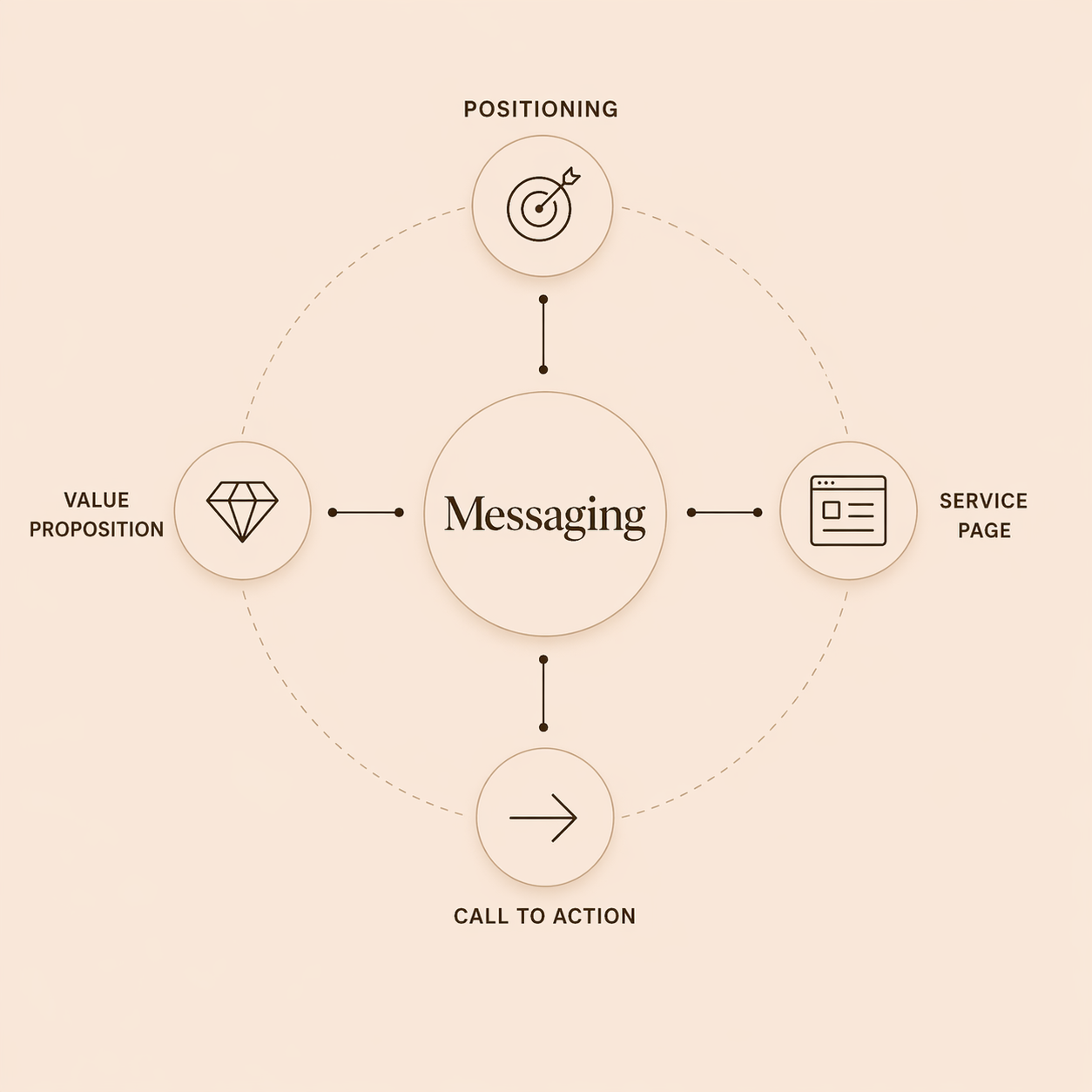
Website messaging is the strategic language a business uses to explain what it does, who it helps, why it matters, and what someone should do next. It shapes how the offer is understood and how the business is perceived. It gives structure to what the website is trying to communicate, from the homepage to service pages to calls to action. But that message works best when it is supported by clear website structure.
A website can have the right pages and still feel unclear. In many cases, the problem is not the offer itself. It is how the offer is being explained. When messaging is vague, generic, or inconsistent, visitors have to do too much interpretation on their own. They are left trying to work out what the business actually offers, whether it is relevant to them, and why they should trust it — a problem that often becomes most obvious on a service page. That uncertainty slows action and weakens the site’s overall effectiveness.
A stronger messaging system reduces that friction. It gives the business a clearer way to present its offer and gives visitors a clearer way to understand it.