
Home » Blog » How Internal Linking Supports SEO and Site Structure
How Internal Linking Supports SEO and Site Structure
Internal linking is one of the clearest ways a website turns separate pages into a usable system. It is more than adding a few links between pages or dropping in “related articles” and moving on. If done well, it helps search engines understand your content, shows which pages matter most, and creates a site structure that is easier to crawl and easier to use. It is not a trick or a shortcut. It is basic site architecture, and when it is ignored, even strong content tends to underperform.
Esmara Abdollahi | ContentDepth
Table of Contents
What internal linking actually is
Internal linking is the practice of connecting one page on a website to another page on the same domain.
On the surface, that sounds simple. But internal linking does much more than help users click from one page to the next. They help search engines discover pages, understand relationships between topics, and determine which pages appear to carry the most weight.
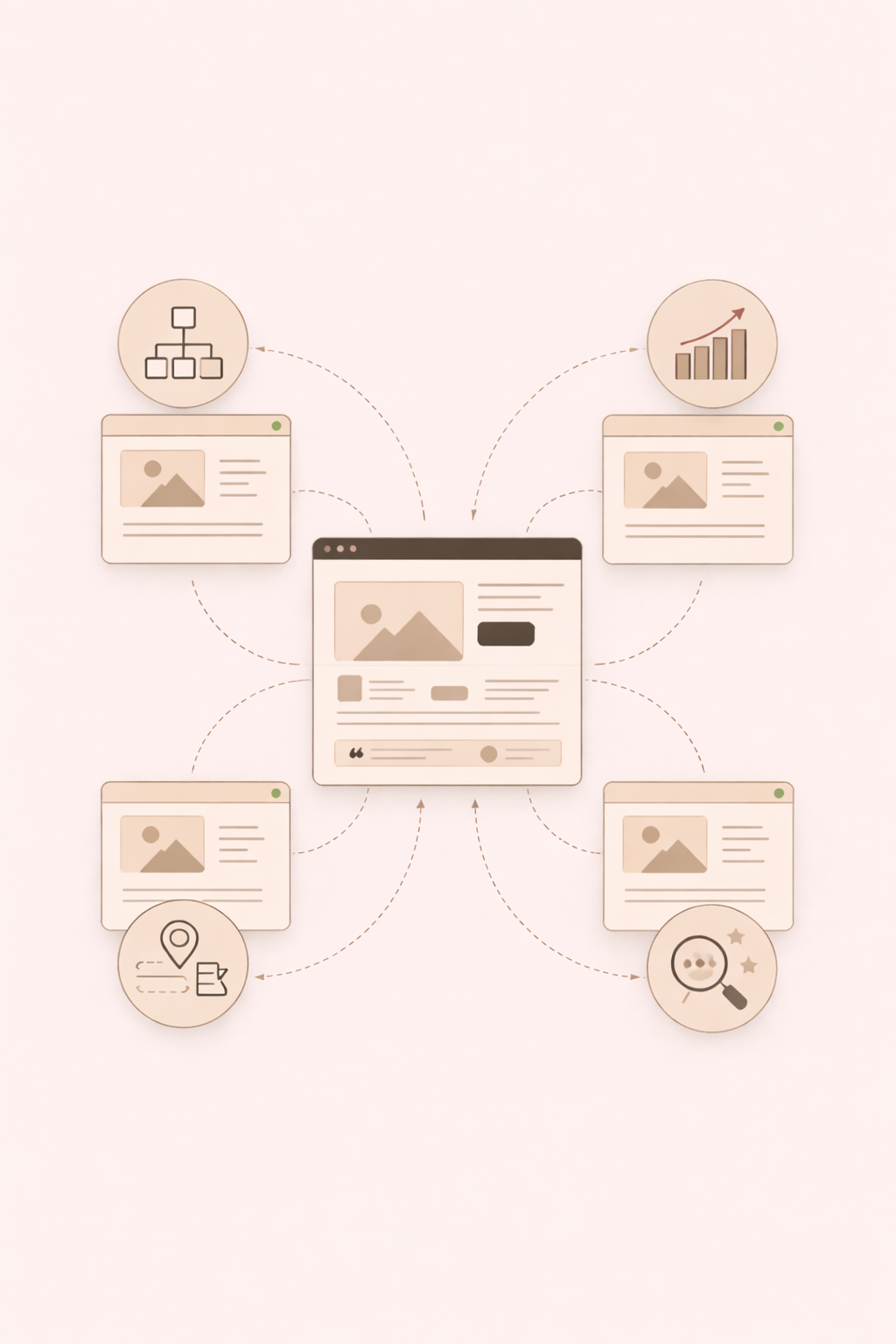
A homepage linking to service pages is internal linking. A service page linking to a related case study is internal linking. A blog article linking to a pillar page or a relevant service page is internal linking too. Inside a wider content system, those links help articles, pillars, and service pages support each other.
What matters is not just that links exist, but that they are placed with purpose. Strong internal linking reflects the logic of the website structure. Weak internal linking leaves content disconnected, even when the pages themselves are useful.
Why internal linking matters for SEO
It Helps Search Engines Discover Pages
Links help search engines find pages across the site. If a page has few internal links pointing to it, it may be harder to discover and harder to prioritize. This often affects newer pages, pages added after launch, landing pages outside the main navigation, or campaign pages that are not well connected elsewhere on the site.
page existing in the CMS does not automatically make it easy to find. Internal linking helps bring that page into the wider structure of the website.
It Helps Search Engines Understand Page Relationships
Internal linking helps search engines understand that pages belong to the same subject area. When related pages connect, they create stronger context around the topic and make the relationship between them clearer.
For example, pages about technical SEO, site audits, crawl issues, schema, and site migrations become easier to understand as part of one broader topic when they are linked together. Without that structure, even useful content can appear more disconnected than it should.
It Distributes Authority Across the Site
Some pages naturally attract more backlinks, traffic, or attention than others. Internal linking helps those stronger pages support other important pages across the site.
That can be useful when a business wants to strengthen service pages, key landing pages, product categories, or supporting articles that matter strategically. The point is not to force rankings by adding links everywhere. The point is to use stronger pages to support the parts of the site that need more visibility.
It Reinforces Page Importance
When a page is linked repeatedly from relevant contexts, it sends a stronger signal that the page matters. Not all internal links carry the same weight, but consistent and logical linking helps reinforce importance more clearly than leaving a page isolated.
This is especially useful for pages the business wants to push forward, such as service pages, pillar content, product categories, landing pages, or pages targeting more competitive terms.
That is why internal linking is not just a technical detail. It is part of how a website communicates structure, priority, and topical relevance to search engines.